Maintaining Independence: Video-modelling in Supported Independent Living
Author: MIchelle Peck
This article covers:
- What is Video Self-Modelling
- Why seeing yourself Matters
- From prompting to self-reliance
- Where Taskey fits
- A call for greater attention and leadership
- Academic studies
For individuals in Supported Independent Living (SIL), particularly those experiencing cognitive decline, maintaining self-reliance depends on both confidence and recall.
When confidence and recall falter, daily tasks that were once automatic can become unclear - steps are cloudy, outcomes are missed. And this can trigger a spiral of loss of confidence, hesitancy to execute skills and finally reliance on others.
But what if the slide from self-reliance towards reliance on others isn’t more moral support or verbal instruction… what if it’s a shift from explaining to showing?
What is Video Self-modelling?
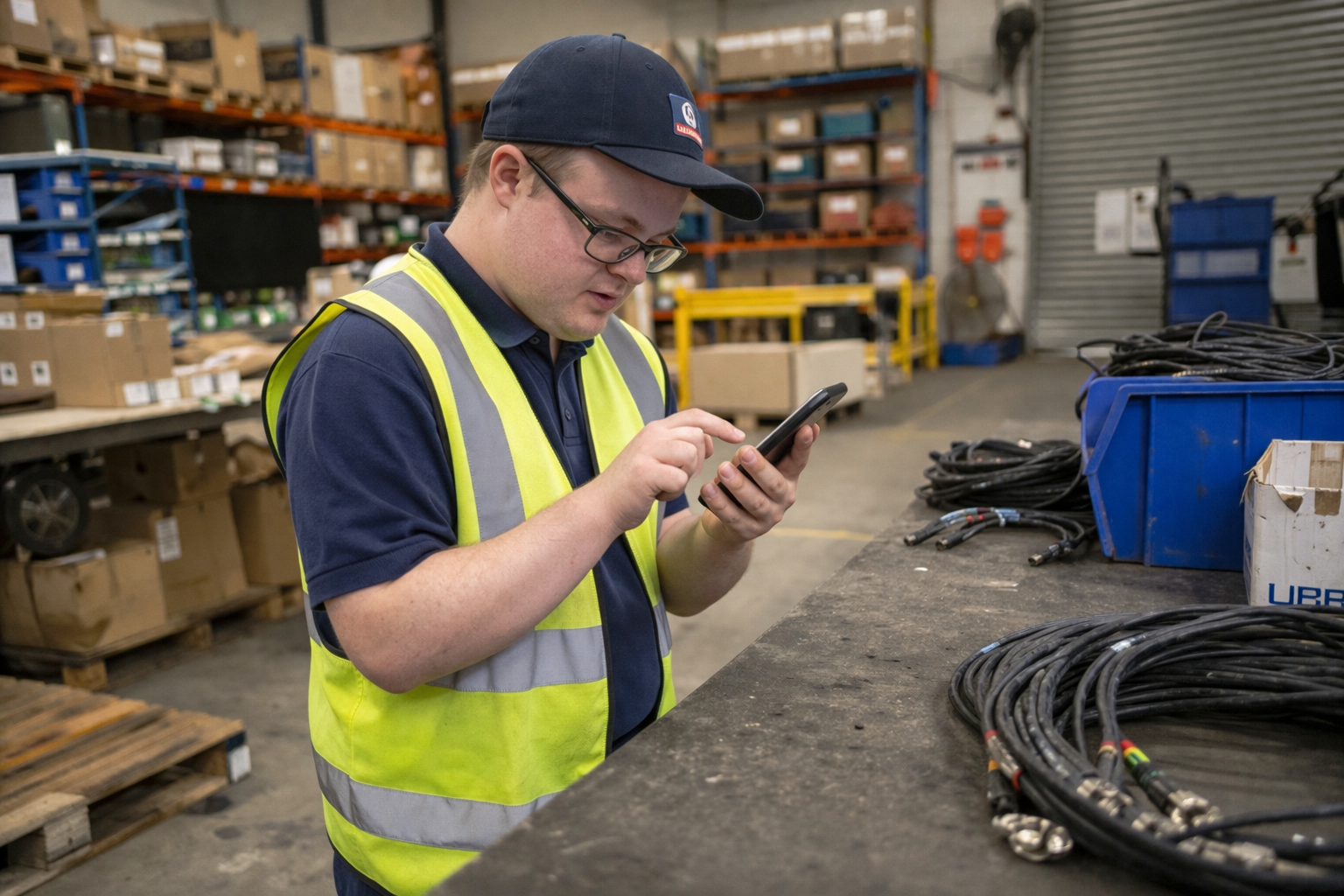
Video Self-Modelling (VSM) is a simple but powerful approach where individuals watch short videos of themselves successfully completing a task, behaviour, or interaction. Rather than learning through instruction alone, the person sees a clear, visual example of their own capability in action.
This creates a highly personalised and repeatable reference point - reinforcing understanding, building confidence, and supporting consistent execution. By showing “this is me doing this successfully,” VSM helps bridge the cognitive gap to successful execution of a task in a way that is familiar, achievable, and real.
Why Seeing Yourself Matters
There is something fundamentally different about seeing your own success. Not someone else demonstrating or an abstract instruction; but you, completing the task and getting it right - even if a carer or practitioner is coaching that task in the moment.
For many individuals, particularly those experiencing cognitive decline, visual recognition and familiarity often remain stronger than verbal recall. Emerging evidence supports the value of visual approaches in this population, showing that presenting information in accessible, concrete formats (such as video) can improve communication and engagement in older adults with cognitive impairment (Chen et al., 2022).
Each time a person watches themselves succeed, the brain receives a clear, reinforcing signal: “This is me. I can do this.”
And from that, a powerful loop begins: See success → Recognise it as self → Copy the behaviour → Build confidence.
Using VSM, confidence leads directly to action and then action reinforces confidence. Over time, this becomes a stabilising cycle that supports task completion and helps to preserve of independence itself.
While more research is needed on VSM specifically in older adults with cognitive decline, early work in neurological and ageing populations suggests that personalised video-based interventions are both feasible and well accepted, with potential to reinforce behaviour through repeated self-observation (Goh et al., 2021).
From Prompting to Self-Reliance
VSM offers a new dynamic in SIL: instead of being told what to do, individuals can see what to do on their own terms, on their own phone, at their own pace, as often as needed.
Importantly, adjacent research in dementia care shows that video prompting and audio-visual guidance can support individuals to complete everyday tasks more independently and reduce reliance on caregivers (Perilli et al., 2013; Mihailidis et al., 2008).
VSM can support any number of life skills and habits:
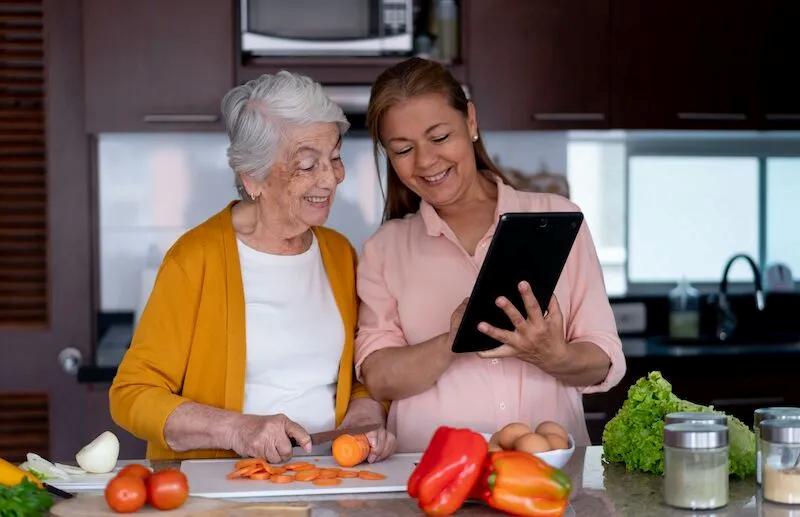
- Preparing a meal
- Following an admin routine
- Locking the door and other safety behaviours
- Taking medication correctly
In home-based dementia studies, structured prompting systems have been successfully used to guide multistep activities, with outcomes improving when prompts are personalised, familiar, and unambiguous (Boyd et al., 2017).
By applying VSM, what was once uncertain becomes familiar. And importantly, the individual person remains at the centre of the action. This is the shift from explaining to showing.
Further studies also demonstrate that carers can use simple tablet-based tools to load meaningful daily tasks, enabling individuals with mild to moderate cognitive impairment to work toward independence in their own environment (Harris et al., 2021).
Where Taskey Fits
Taskey enables VSM tit easily into everyday practice. It allows carers, practitioners, support workers, mental health coaches, occupational and physical therapists to:
- Capture real moments of success as they happen
- Create personalised, video-based supports
- Assign with push-notification reminders
- Deliver guidance that continues into daily life
- Make guidance across multiple sources available in one central app
This approach aligns with a growing body of evidence showing that technology-supported prompting and visual guidance can help individuals with dementia or cognitive impairment complete multistep tasks more independently (Lancioni et al., 2021).
And the benefit of using Video Self-Modelling in SIL is clear: supported and sustained independence. A simple, practical way to help people in supported living environments remain capable, independent, and in control.
A Call for Greater Attention and Leadership
While the broader evidence base for video prompting and visual supports in dementia care is strong and growing, Video Self-Modelling remains underexplored in SIL and ageing populations. This is where thought leadership is needed.
VSM represents a natural evolution of existing evidence-based approaches that recognise the individual as the centre of their own experience, and their own life.
The opportunity now is not just to observe this shift - but to lead it.
We invite forward-thinking leaders across Supported Independent Living - providers, clinicians, researchers, and innovators, to explore how tools like Taskey can bring Video Self-Modelling into everyday practice. To test, shape and build the evidence together.
Ultimately, we all wish to help older individuals remain capable, independent, and in control of their own lives—for longer. This is the kind of progress worth leading.
Acedemic Studies
With visual prompting, older adults completed more steps independently, requiring 60% fewer caregiver interactions: The COACH prompting system to assist older adults with dementia through handwashing: an efficacy study (Mihailidis et al., 2008)
Video-based prompting improves daily living task performance: Video prompting interventions for individuals with Alzheimer’s disease (Perilli et al., 2013 summary via PubMed)
Importance of personalisation, familiarity and clarity in prompting systems for multi-step tasks in people with dementia: Using prompting technologies to support multistep tasks in people with dementia (Boyd et al., 2017)
Tablet-based prompting with carers - individuals could follow tasks on tablet to support independent completion: Client-centred prompting tool for everyday activities in dementia (Harris et al., 2021)
Visual communication in cognitive impairment improves engagement and comprehension: Visual methods to support communication in older adults with cognitive impairment (Chen et al., 2022)
Review of studies on technology-based prompting systems for people with dementia or cognitive impairment in performance of multistep tasks: Technology options to help people with dementia or acquired cognitive impairment perform multistep daily tasks: a scoping review (Lancioni et al., 2021)